Retail
Shopping complexes
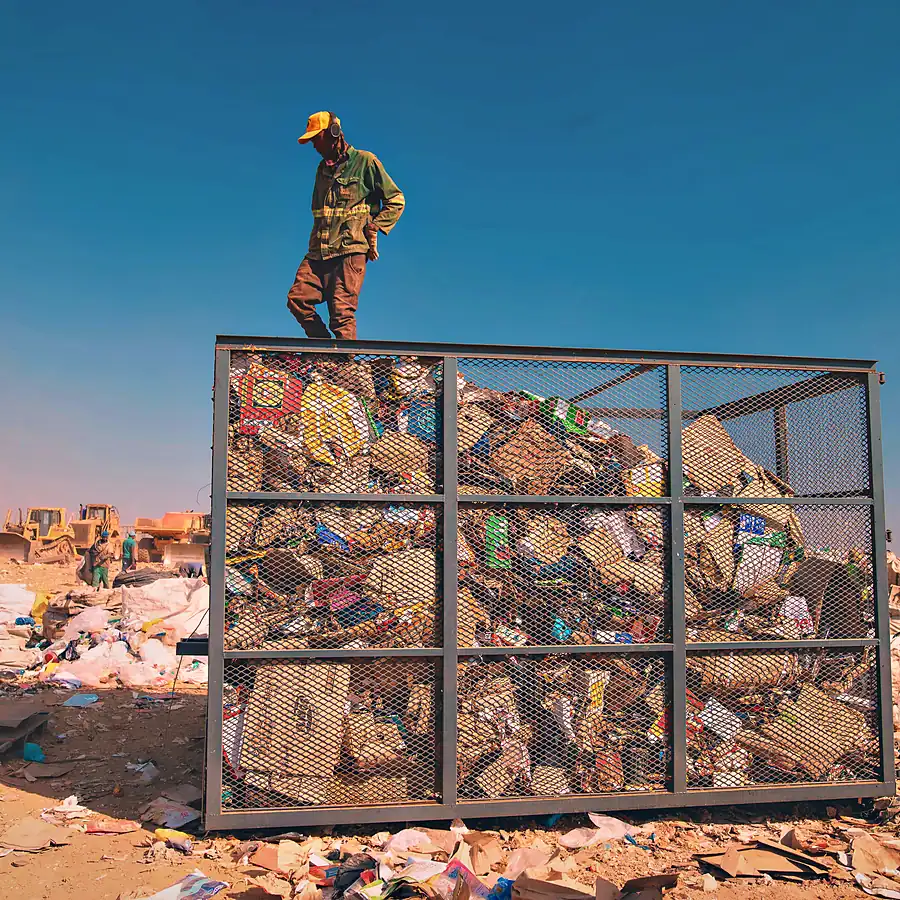
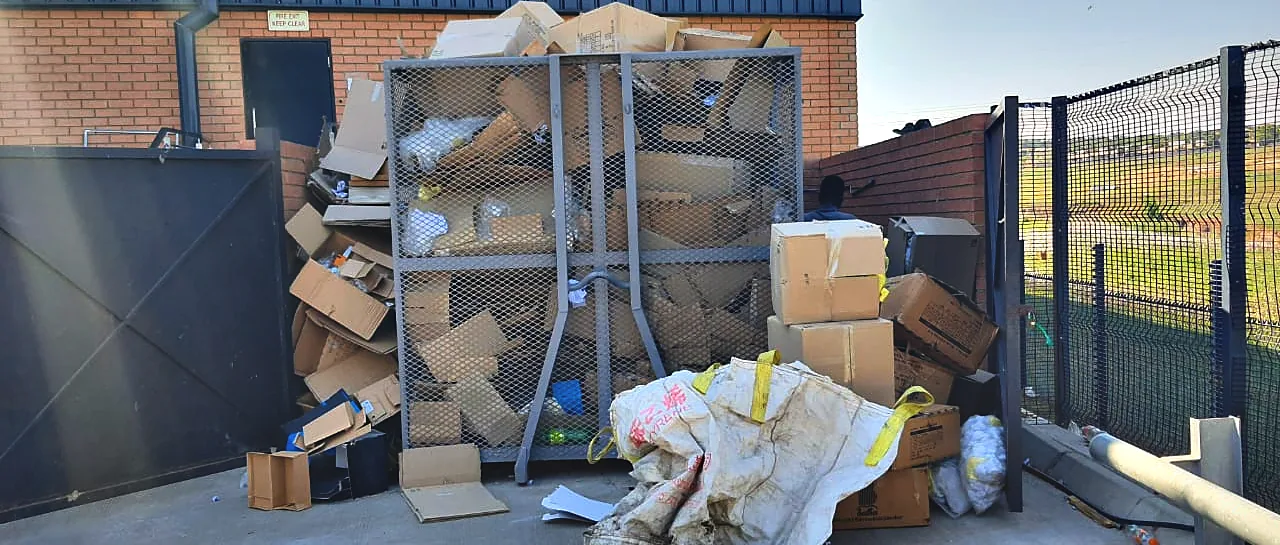
Cardboard volume is enormous and predictable. Tenants flatten it or they do not, and the bin room shows which. Cages in the service yard turn that into a recovered stream.
Murero places grey mesh cages on your premises, collects them on a schedule you set, and sorts what comes out. You get the tonnage back as a record, not an estimate.
| Ln | Material | Code | Recovered as |
|---|---|---|---|
| 01 | Card boxes | OCC | Baled corrugated |
| 02 | White paper | WP | Baled fibre |
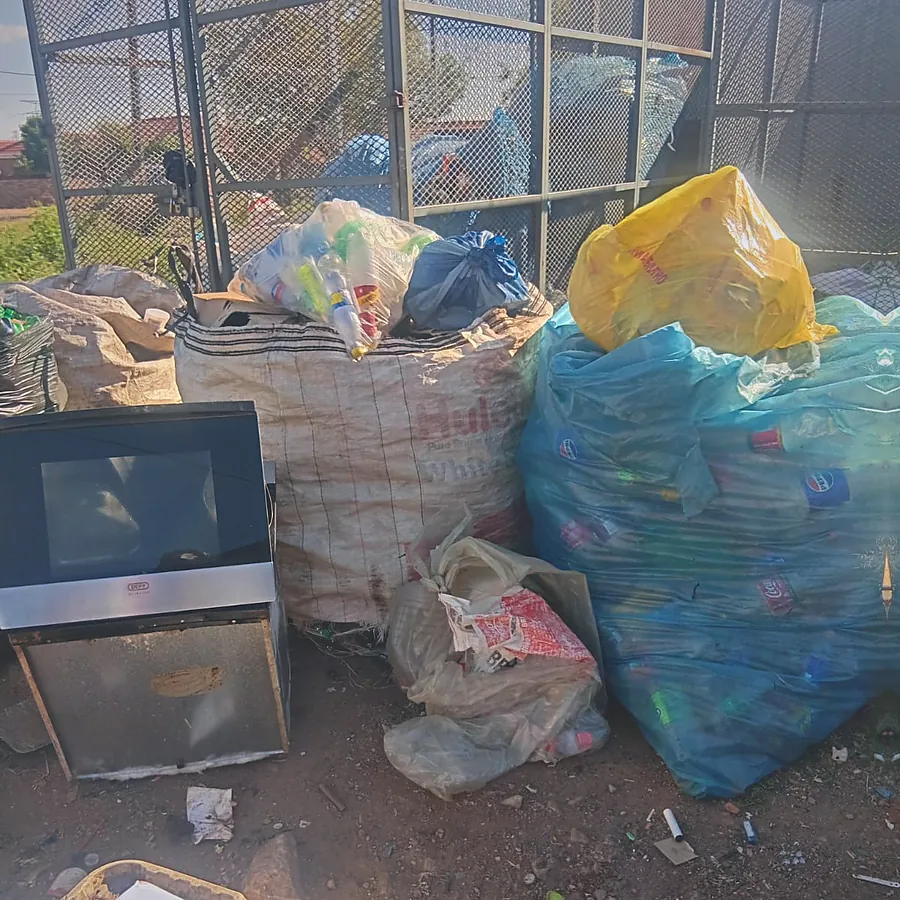
| 03 | PET bottles | PET | Sorted, clear and mixed |
| 04 | Plastics | HD / PP / LDPE | Graded by polymer |
| 05 | Glass bottles | GL | Collected whole |
| 06 | Steel and cans | FE / ALU | Sub-grade steel, aluminium |
Four steps, then it repeats on your schedule. No contract gymnastics, no waiting on a call centre.
We walk your site, look at what you are currently throwing away, and work out how many cages you need and where they stand so your crews will actually use them.
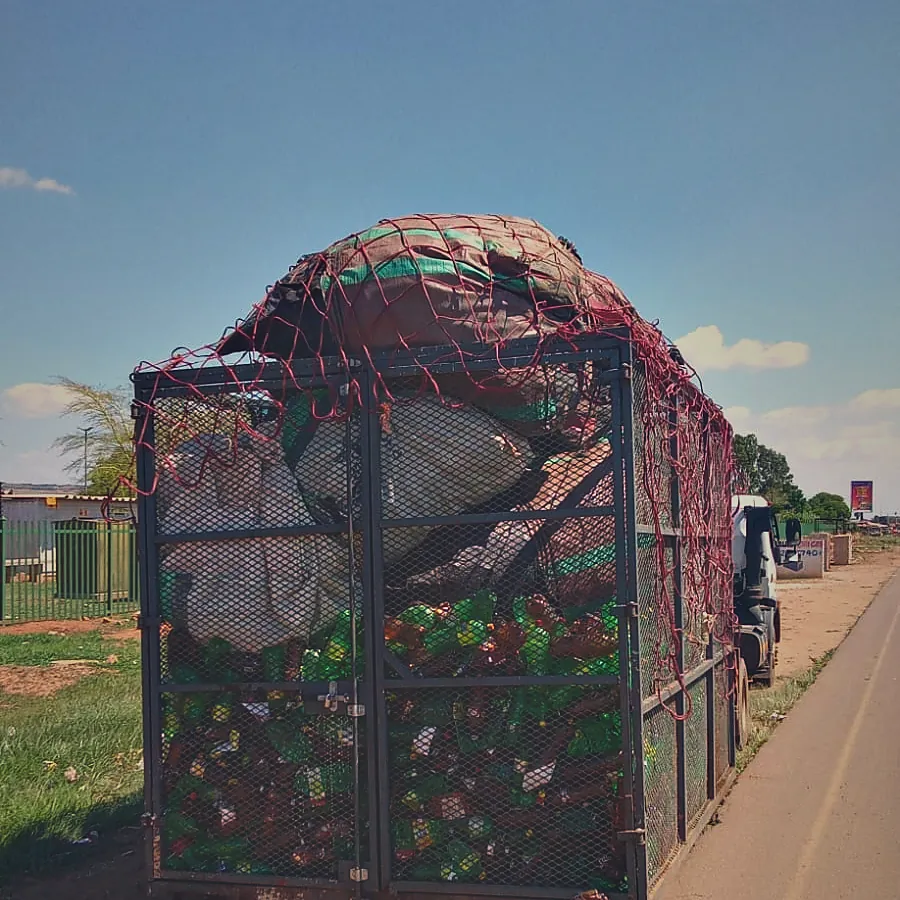
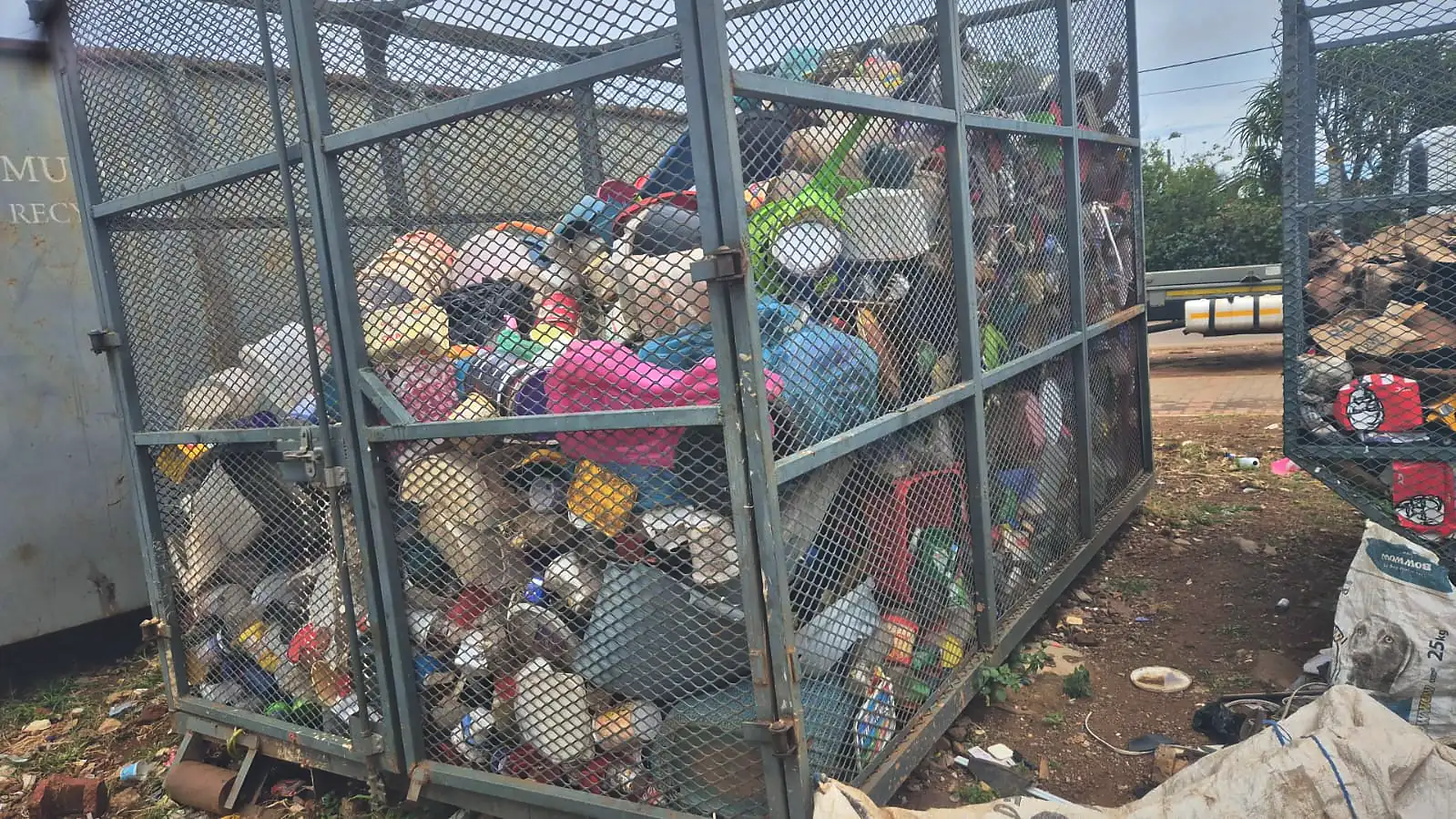
Mesh cages go in at the loading bay, the yard or the bin room. Mesh sides mean your team and ours can see the load, so contamination gets caught early instead of at the sort line.
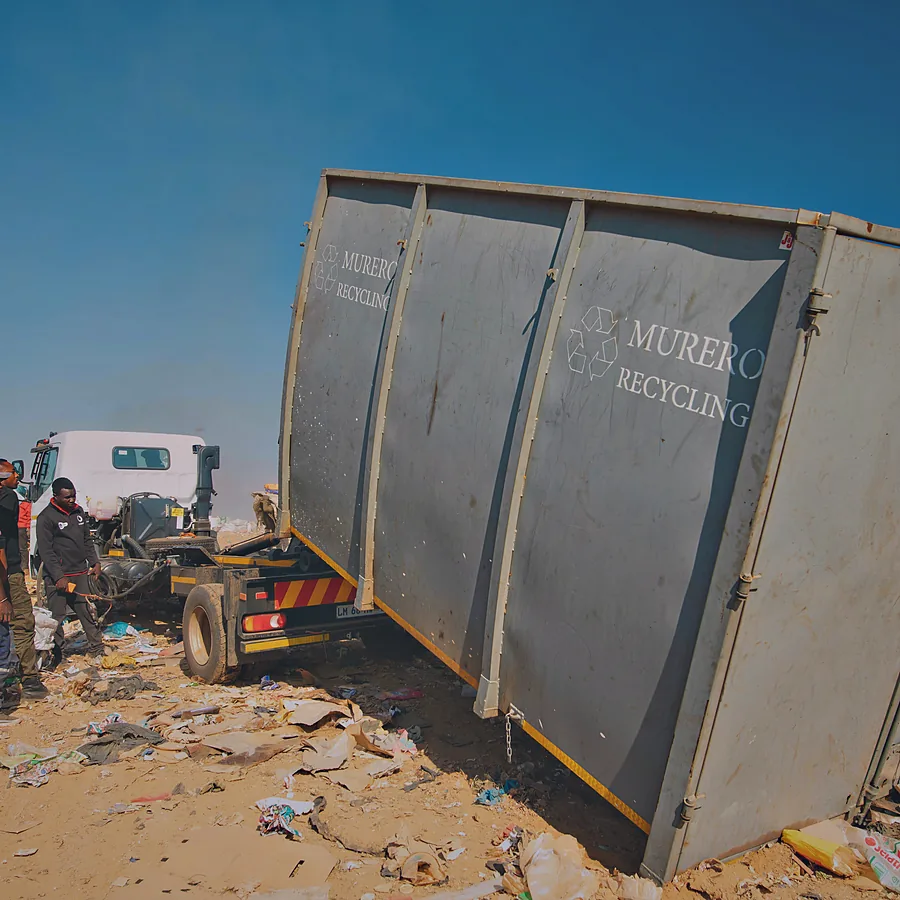
The hook-lift truck swaps a full cage for an empty one. Your bay is never left without a container, and the swap is logged.
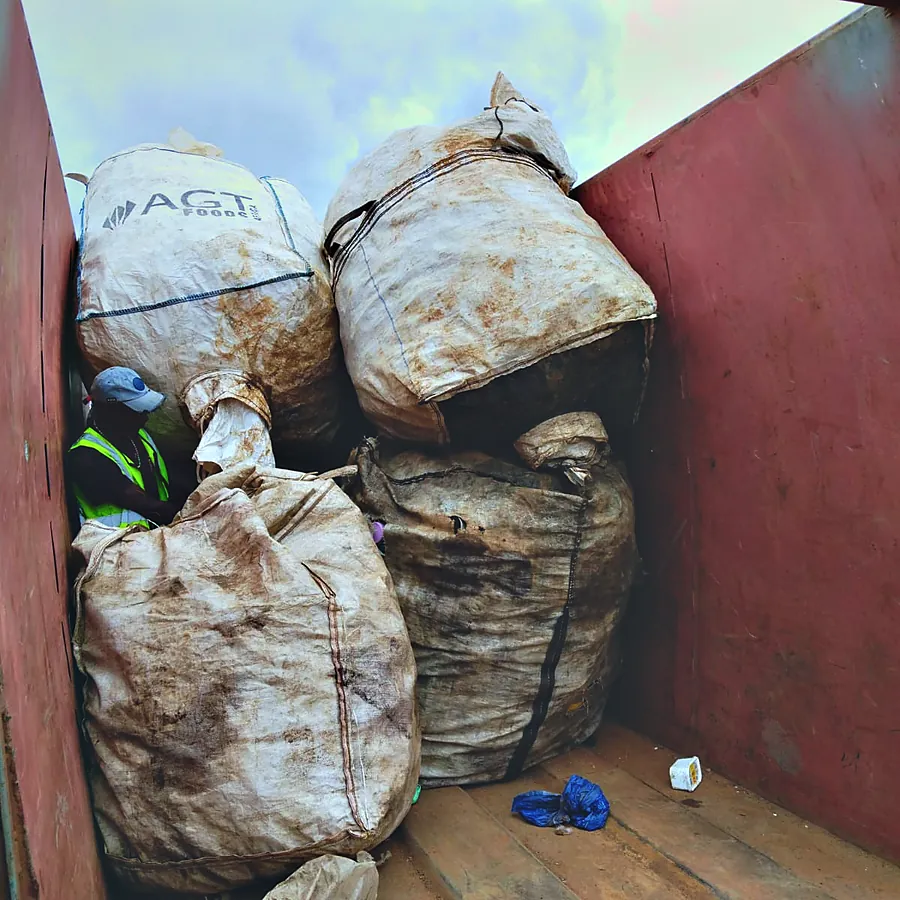
Material is separated on site or at our sorting site, graded by stream, and delivered to reclaimers. What you diverted comes back to you as a record.
A rubble skip is built to take builders waste to landfill. Our cages are built for the opposite job. The lower body is solid steel and the upper sides are diamond mesh, so a cage swallows bulky, light material like flattened cardboard and baled plastic without crushing its value, and everyone can see what is in it.
That is the whole difference. A skip firm is measuring how much they took away. We are measuring how much came back.
Every cage in this row is material that did not go to landfill.
Six kinds of site, each with a different waste profile and a different reason the current arrangement is costing more than it should.
Retail
Cardboard volume is enormous and predictable. Tenants flatten it or they do not, and the bin room shows which. Cages in the service yard turn that into a recovered stream.
Industrial
Off-cuts, packaging film, strapping and steel. Usually the highest-value mix on any site, and usually the one going out mixed with general waste.
Logistics
Pallet wrap, cartons and shrink film all day. High throughput needs a swap cadence, not a fixed weekly visit.
Commercial
White paper, board and cans, plus the confidential paper that has to be destroyed rather than recycled. We handle both.
Agriculture
Feed bags, drums, crates and packaging spread over distance. Cages let a farm consolidate in one place before we come.
Residential
Separation only works when it is easy. A visible mesh cage next to the general bin does more than a notice on the gate.
Waste is the one line item where the invoice is not enough. Someone eventually asks where the material went and who took it, and a delivery note from a general waste contractor cannot answer that.
A site assessment is a walk around your premises and an honest answer about whether we can improve on what you have. It costs nothing and it takes about half an hour.